Baltic youth movements to Danish Ministers: "Our future is at stake Stop the Lynetteholm project and consult all Baltic Sea countries!"
26 October 2023, Uppsala / Copenhagen / Stralsund -
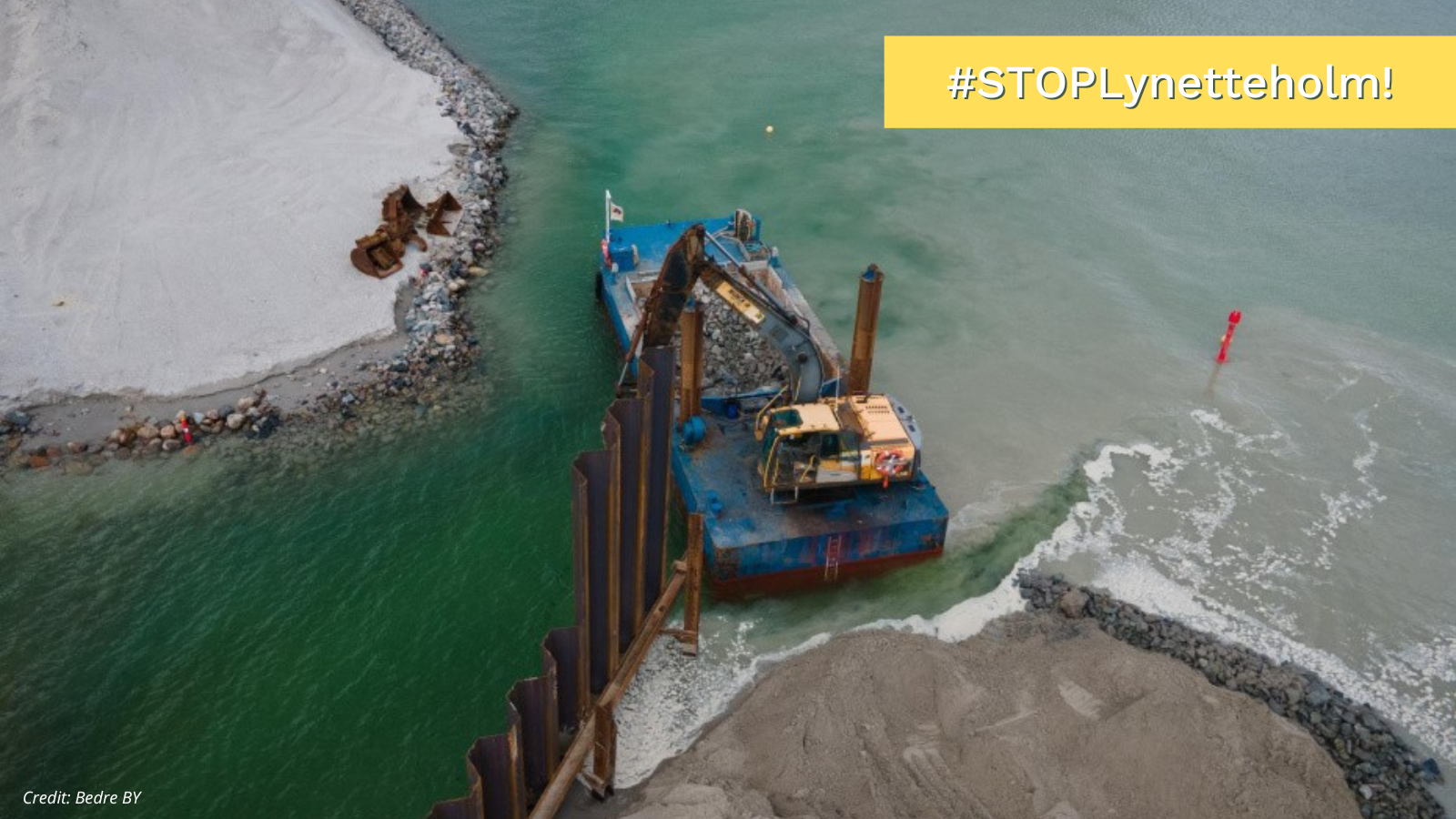
Today, environmental and youth NGOs from 11 countries of the Baltic Sea Region representing over 1,500,000 citizens sent a letter [1] to the Danish Minister of Transport, Thomas Danielsen, and the Danish Minister of Environment, Magnus Heunicke, expres sing their deep concern about the Lynetteholm project [2], an artificial island in the Copenhagen harbour that may affect the biodiversity and ecological state of the entire Baltic Sea.
According to Stiig Markager, a Danish Professor of marine ecology and biochemistry at Aarhus University, the artificial island may block the flow of vital oxygen rich salt water through the Danish Øresund to the Baltic Sea a blockage that according to hi m can have significant, irreversible, negative environmental consequences for the Baltic Sea and all the countries around it [3].
Therefore, young people living in the Baltic Sea Region call on Danish Ministers to promptly engage an independent multinational marine expert body that will have a clear overview of the cumulative environmental effects of all projects in the Baltic Sea marine areas and the responsibility for the status of Øresund and the Baltic Sea.
"The Danish authorities are ignoring not only us, young people and concerned citizens, but also scientists and International and European laws [4]. It is our future, the future of our children and that of the marine environment of the entire Baltic Sea that is at stake. Therefore, we urge the
Danish Parliament to engage an independent multinational marine council to evaluate the potential environmental consequences of Lynetteholm as well as of future projects in the Baltic Sea", commented Maren Høj Muff from the Green Youth Movement in Denmark, as one of the representatives of the environmental and youth NGOs behind the letter.
Until then, they request the Danish ministers to immediately put the Lynetteholm project on hold and to consult all countries that may be environmentally and financially affected by this project because as they state “a good cooperation between the Baltic Sea countries is an absolute necessity not only to protect the marine environment of the Baltic Sea, but also to see us move towards a better future”.
***
For further information, please contact:
Mikhail Durkin, CCB Executive Secretary:
mikhail.durkin@ccb.se
(+46) 739 770 793
Maren Høj Muff, The Green Youth Movement in Denmark:
mhmuff@gmail.com
(+45) 4086 2101
Moritz Röhlke, NAJU Rostock:
rostock@naju-mv.de
Daniela Herrmann, Scientific Associate Marine Conservation, Nature and Biodiversity Conservation Union (NABU):
Daniela.Herrmann@nabu.de
+ 49 (0)162 2050373
***
NOTES for the editors:
[1] The full letter is available here.
[2] In June 2021, A majority in the Danish Parliament approved the Lynetteholm project, allowing the construction of an artificial island of 2.8 km2 that will provide a new residential area for 35,000 inhabitants and 35,000 workplaces in the outlet of Copenhagen harbour. The project is due to be completed in 50 years’ time (2070). More info: https://www.ccb.se/-stoplynetteholm-campaign
[3] The Baltic Sea is brackish water and only receives oxygen rich salt water from the Atlantic Ocean through the three Danish seas Øresund, Great Belt and Little Belt. According to Stiig Markager, Professor of marine ecology and biochemistry at Aarhus University, there is a high degree of certainty that even a minor reduction in the salinity of the Baltic Sea will have significant negative consequences for biodiversity and the ecological state of the Baltic Sea. Read his memo /analysis sent directly to Danish politicians (April 2023).
[4] Under the UN Espoo Convention and the EU's SEA/EIA Directives, the authorities of a country are obliged to consult all countries that may be environmentally affected by a construction project unless "significant transboundary impact can be excluded with certainty". The Lynetteholm project was approved despite Swedish criticism and without consultation of all the Baltic Sea countries despite the fact that all Baltic Sea countries may be affected.
So far, only Sweden has been consulted under the Espoo Convention. However, the Lynetteholm project was adopted in the Danish Parliament in June 2021 despite the fact that the Swedish Minister of Environment and Climate a month before had sent a letter directly to the Danish Minister of Environment in which he emphasizes the importance of the Danish Parliament not taking any decisions regarding Lynetteholm before the environmental impacts have been properly investigated and before the Espoo consultations between Denmark and Sweden have been finalised. His letter was kept secret and not forwarded to the members of the Danish Parliament before voting about the Lynetteholm project (read the full letter in English here: Microsoft Word - Per Bolund 2021 letter final.docx (cdn-website.com) and the original here: Aktindsigtsoversigt 4 - Maj-2021-Jan 2022.pdf (cdn-website.com). In addition, a letter sent to the Danish authorities in May 2023 on behalf of six Swedish authorities - where they repeat their concern for the Baltic Sea and ask about the solution regarding the blocking of saline water to the Baltic Sea - has so far been ignored (read the full letter in English here Microsoft Word - Naturvaardsverket letter May 2023 final.docx (cdn-website.com) and the original here: Yttrande remissvar (cdn-website.com)